
Ready to Make Your Move If Rates Go Down?

If, as many experts are predicting, interests come down this fall, we can expect the real estate market to warm up. According to Forbes magazine, “… the housing market will only see renewed momentum once mortgage rates drop enough to ease affordability challenges and incentivize homeowners locked in at low rates to move so inventory grows substantially to meet demand.”[1]

If you’ve been waiting in the wings for the most advantageous time to sell your home and/or make a move to another one, this rate drop, when it happens, might be your opportunity. You’ll want to be prepared to take quick action. Here are some things you can be doing now to prepare your home for sale so when the timing is right, you are ready for action!

I can confidently say that first impressions matter, and a well-prepared house can fetch you the best possible price. So, let’s dive right in!

  1. Declutter and Depersonalize

The first step in preparing your home for sale is to declutter and depersonalize it. This means removing any excess furniture, knick-knacks, and personal items. The goal is to create a clean, uncluttered space that allows potential buyers to envision themselves living in the house. Remember, you want them to see their belongings in the space, not yours.

  1. Repair and Replace

Before putting your home on the market, ensure that all necessary repairs are completed. This could include fixing leaky faucets, patching holes in the walls, and addressing any issues with appliances or electrical systems. Additionally, consider replacing outdated fixtures and hardware, such as cabinet handles or light switches, to give your home a more modern and polished look.

  1. Clean, Clean, Clean

A clean house is essential when selling. Deep clean your home, paying special attention to the kitchen, bathrooms, and high-traffic areas. Don’t forget to clean windows, curtains, and baseboards, as well as any appliances that will be included in the sale. A spotless home will not only make a great impression but also make it easier for potential buyers to imagine themselves living there.

  1. Enhance Curb Appeal

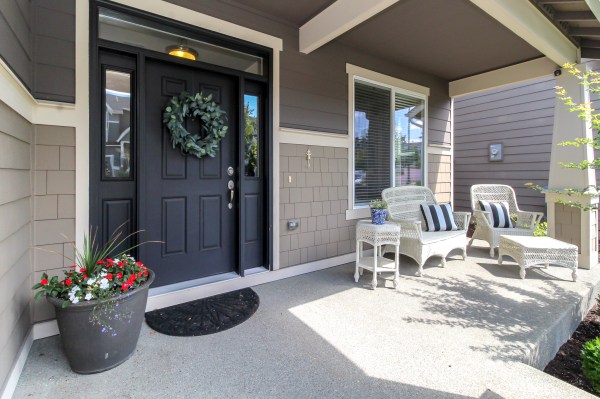
First impressions are crucial, so make sure the exterior of your home is just as inviting as the interior. Enhance curb appeal by trimming overgrown bushes, mowing the lawn, and adding some potted plants or flowers. Power-washing the exterior, repairing any damaged siding, and applying a fresh coat of paint to the front door can also go a long way in making your home more attractive to buyers.

  1. Neutralize Colors

While you may love your bold, colorful walls, potential buyers may not share your taste. To appeal to a broader range of buyers, consider repainting your walls in neutral colors, such as beige, gray, or white. This will create a blank canvas that allows buyers to envision their own style and design preferences in the space.

  1. Light It Up

Good lighting is essential when selling a home. Ensure that all light fixtures are in working order and replace any outdated or damaged fixtures. Additionally, consider adding additional lighting sources, such as floor lamps or table lamps, to brighten up dark corners and create a warm, inviting atmosphere.

  1. Stage Your Home

Home staging can make a significant difference in how potential buyers perceive your property. Consider hiring a professional home stager or follow some basic staging tips, such as arranging furniture to create a natural flow, adding decorative accents, and setting the dining table to create a welcoming atmosphere. Remember, the goal is to make your home feel warm, inviting, and ready for its new owners.

  1. Organize and Optimize Storage Spaces

Buyers are always on the lookout for ample storage space. Organize your closets, cabinets, and other storage areas to showcase their full potential. Remove any unnecessary items and neatly arrange the remaining contents to make the space appear larger and more functional. (Need help with this one? If you’re local to the Gig Harbor, Washington area where I am, I highly recommend Northwest Home Coach.)

  • Select Your Real Estate Broker and Be Ready to Go

Obviously, there are a lot of eager agents to choose from! Make sure you select one with home you can have a trusting relationship and good rapport, and in whose negotiating and problem-solving skills you can have the utmost confidence. Preparing your home for sale requires time, effort, persistence, wisdom, and attention to detail. By following these tips and selecting the right agent, you’ll be well on your way to showcasing your property in the best possible light, attracting the right buyer, and locating and purchasing your next new home.

Doug Lawrence is a Managing Broker with Better Properties in Gig Harbor, Washington. He can be reached at 253.341.5287 or by email at douglaslawrence15@gmail.com.


[1] https://www.forbes.com/advisor/mortgages/real-estate/housing-market-predictions/. August 14, 2024


What You Need to Know About Relocating

Moving, whether across town or across the country, can evoke a blend of excitement and dread. New job? New digs? New scenery?  Hooray! Good-bye to friends and family? Loss of familiar routes and routines? The hassle of packing, moving, and setting up in a new location? Perhaps not so exciting.

One thing I’ve learned over the years is that “what you focus on expands.” Sure, you need to address the downsides. But by focusing on the upsides, your positive perspective will make all the difference in the world. Just think: you’ll get to explore a whole new place and all that that new place has to offer! There’ll be new activities, new restaurants, new friends, new parks, and more.

With that in mind, here are some suggestions about the kinds of things you’ll want to research before or during your move process:

1. What amenities are available in the new location and how important are they to your lifestyle?

The area or neighborhood you live in makes your home what it is. Check out Google Maps before your big move. Maybe even make a list of the advantages and disadvantages to each area you research—it can help make the decision easier. If your kids are in school, you’ll likely want a school facility close by. Do you want them to attend a private or public school? Is there one close by? What about grocery shopping? Is it easy to get to? Do you like to have a gym you can walk to? Are there parks? Ask yourself these questions ahead of time. Determine their importance to you and your family.

2. What is there to do in the new location (e.g., recreation and events)

Find out what big events and attractions there are. If your family is into skiing or mountain biking (or any other sport/activity), look to see if there is a place close by where you can participate. What events are there coming? (Finding activities and fun events to look forward to can lessen the impact of a move, such as moving far away from friends and family.)

3. How much does it cost to live in the new location? (Be prepared.)

Cities come with different price tags, as far as cost of living goes. Make sure you know what you’ll be spending before you commit. Gas and grocery price can be different in different regions. Calculate what you can expect to spend in your new city—how does that work for your budget? Shrewd financial planning in advance can make all the difference in avoiding future panic or crises.

4. Plan how you’ll connect once you get there. What are ways you can meet people in your new location? A sense of community and belonging is the first and best way to feel settled and “at home.” Some of this may come from a job or school, but not all of it.  Where can you find likeminded new friends to share life and experiences with? Is there a faith community you can connect with? Civic clubs? Non-profits and community service organizations you can join or volunteer with? Sports teams/fitness clubs you can join? Jumping in to environments like these can make the integration process go much more quickly.

My motto is “love where you live,” and there are so many ways you can help make this happen for yourself and your family when a relocation is involved. I hope these have been helpful; they are only a start.

If you are anticipating a move and have real estate needs as a part of the package, I hope you’ll give me a shout or send an email. Even if you’re moving across country or in another town, I can help with referral and connection to a trusted real estate professional in my network. I’ll do my best to help you and your family “love where you live,” wherever that may be!

Doug Lawrence is a licensed broker with Keller Williams West Sound. He is a certified Veterans and Military Relocation Specialist and a Global Property Specialist. No matte where your move may take you, he can help! You can reach him through this site, by email at dlawrence@kw.com, or by phone/text at 253.341.5287.  

Amazing Views of Hales Passage from Ready-to-Build Fox Island Lot!

Have you been thinking of view property on beautiful Puget Sound in Washington State? Look no further than this: the development has already been done . . . so bring your plans and get going on the water-view house you’ve been dreaming of!

From your vista on desirable Bella Bella Drive on Fox Island, you’ll enjoy unobstructed views of Hales Passage and the Fox Island Bridge. The over 1/4-acre lot is level and has been fully cleared; a three-bedroom septic has been installed and water and electricity are already to the property.

$299,950

Offered by Doug Lawrence and Keller Williams West Sound
MLS#1358855
224 B Bella Bella Dr, Fox Island 98333.

Call for showing; listing agent must be present at initial viewing to highlight all the incredible amenities of this exclusive property. 253.341.5287
dlawrence@kw.com
www.douglawrencerealestate.com

Offers: Seller intends to review offers upon receipt.

Doug Lawrence is a Fox Island resident whose motto is “Love Where You Live!” He especially enjoys the opportunity to offer others a chance at the “island living” enjoyed by residents on Fox Island. You can find out more about Doug and Fox Island living at www.foxisland.net and www.visitgigharbor.com.

Overcoming Deferred Maintenance: Prepping a Fixer for Sale

So, you want to sell your house, or maybe someone else’s house—an aging or deceased relative, for example. And, for whatever reason, the property has experienced “deferred maintenance.” It needs a lot of work!

Bringing a “fixer” home up to a sellable standard can seem overwhelming sometimes, especially when it needs significant improvements. Getting top dollar for a property that needs work can be challenging, especially if your budget for improvement is tight. That being said, with the right perspective, some creativity, and strategic emphasis on the right things, it can be done—for less time and money than you probably think.

Where to Get the Most Bang for Your Buck

Experts often say to put your energy into updating the kitchen and bathroom for maximum impact. However, a major renovation in these areas can set you back tens of thousands of dollars and take weeks to complete, which simply isn’t possible within a tight budget and time frame. So instead, make your focus on the areas of the home that will make a good first impression and enhance the overall look of the house—for a minimal outlay of cash. Here are my top five recommendations:

1. Get rid of the clutter. Buyers need to be able to visualize their own life in the house—impossible if there are piles of stuff everywhere! The clutter has to go. (If this feels overwhelming, hire a high school or college student who wants to make a few extra bucks to help you sort.) Have three categories of bags or boxes available as you move through the rooms: throw away, give away, put away (keep). The “keep” pile will be the minimal amount of stuff you either want to take with you to your next home if you are selling your own home, or perhaps mementoes or heirlooms you want to pass on to family members, etc. in the case of liquidating a home for a relative. “Give away” goes to Goodwill or other similar charity (often these organizations can arrange to pick up your stuff). And “throw away,” well, that just goes straight into the garbage or to the dump! (You may also have a “garage sale” pile as well.)

2. Give rooms a facelift. Repaint the interior walls in a neutral color. Replace carpets (opting for a low-cost but good-quality laminate floor is often a good choice). Paint and new flooring not only improve the look of the house, but also the smell, giving the impression of fresh, clean, and new.

3. Get rid of dated or dodgy furniture. Keep only the nicest furnishings (less is more). If you don’t have any, consider borrowing statement pieces from friends or neighbors temporarily to improve the look of the home for showing. Or pick up a few new inexpensive or free things on Craigslist or local give-away websites. If staging isn’t your forte, ask a friend with an eye for style to help you arrange the rooms attractively. Your real estate professional may be able to provide assistance with this.

4. Give every surface a deep clean. Include exterior surfaces and windows, interior walls, floors, trim, doors, bathrooms, tile, etc. If you don’t have the time or energy for cleaning, hire some help. It will be worth it!

5. Tidy the front and outside of the house. Weed and trim the gardens, prune hedges, and mow the lawn. This makes a tremendous improvement in the curb appeal, for little to no money. The changes that will make the biggest impact may actually cost nothing more than a few weekends of hard work! Tip: adding bark mulch is an affordable update that is especially effective, as it injects color and makes garden beds look neater. Also, clean the roof and gutters. (If the roof needs to be replaced, do it now. You don’t want the roof to be an area of distraction and it will likely be required anyway.)

 Keep Your Buyers’ Goals in Mind

Consider that potential buyers of a dated or fixer property will likely be planning on renovating themselves, and will have their own ideas on what changes they want to make. So you don’t have to do everything, especially things they will likely later undo. That’s why spending big on significant improvements can actually be counterproductive in these situations. Your job is to make the home and property liveable, neat, and tidy, so they can best see and appreciate its potential.

Your buyer can take it from there!

(c) 2018. Doug Lawrence Real Estate. All Rights Reserved.

Doug Lawrence is a licensed real estate broker with Keller Williams West Sound in Gig Harbor, Washington. Do you have a “fixer” you’ve been thinking of selling and are dreading getting it prepped? Give him a call, whether you’re around the corner or across the country.  He’s happy to help you get the process started and guide you all the way from sorting to SOLD! 

Love Where You Live – Volcano Edition

It all started out as a hope-to, an item I wanted to check off my bucket list: to climb a mountain.

I’ve always thought climbing a mountain was a big, hairy audacious goal that many people talk about but never do. I wanted to separate myself from the pack and be one of the few that do it. So, on July 26th, I had the great pleasure (wait, did I say pleasure?), I mean, I had the great gratification of summiting Mount Saint Helens in Washington State.

I picked Mt. St. Helens as my mountain of choice because it’s a true mountain, achievable with only a moderate amount of gear and training. On the surface, it seems like a moderate-to-hard hike; after all, it is “only” five miles up—two through forest, two across a massive boulder field, and one straight up through loose scree (small, gravelly volcanic rubble). It’s the 8,500-foot elevation gain that really knocks the wind out of your sails and gives you pause to consider (or reconsider) most things in your life.

Looking back down at the one-mile stretch of scree

It’s one of those things that’s hard to explain unless you’ve experienced it, or something like it. All that being said, that moment when you reach the top of the mountain—the cloudless sky, the limitless view, the surrounding peaks, breathing all that in, absorbing it, contemplating it, pondering it—makes the trek more than worth it.

On top of the world (looking down at the lava dome, Mount Rainier in the distance)

Mount Saint Helens is noteworthy for its huge eruption in 1980, and is still an active volcano. Standing on the precipice, looking down at the lava dome with plumes of steam seeping out of it, was magnificent. For me, it was a bit of a full circle, having been nearby in 1980 when the mountain erupted. A high schooler at the time, I had been down in the Longview/Kelso area visiting my brother. I slept obliviously through the eruption, to be greeted on awakening the next morning by swollen rivers, a sky full of ash, and horrific traffic jams of panicked and/or curious residents and onlookers. Nearly forty years later, all that’s just local history. But it was very cool to come back and see how quickly the mountain has repaired itself, its beauty and majesty restored.

Whether you live in the shadow of a volcano as I do, there are adventures to be explored in your neck of the woods, as well. Please comment and share your stories: how do you love where YOU live?

Doug Lawrence is a professional real estate broker with Keller Williams West Sound in Gig Harbor, Washington.  Doug’s motto is “Love where you live!” Whether you’re looking to buy, sell, or invest, he’ll put his appetite for adventure and challenge to work on your real estate transaction when he’s not applying it to a mountain.  You can find him at http://www.douglawrencerealestate.com or by phone or text at 253.341.5287.

(c) 2017 Doug Lawrence. All Rights Reserved.


Think You Can’t Afford It? Think Again.

September means back to school, back to routine, and back to . . . home shopping?  Yes, for many folks!

Although, as I mentioned last month, this has been a challenging market lately, affording the mortgage payment for the house they want IS possible for many prospective homeowners. Why then, by all accounts, is a sense of “unaffordability” plaguing the market?

Researchers at Freddie Mac offered several answers to that question in its latest Insight, the first one being perception. Homebuyers struggling to find reasonably-priced listings perceive the housing market in general as unaffordable — a reasonable conclusion, if their only options to date have been out-of-reach stock.

Secondly, the high likelihood these days for competition (i.e., “bidding wars”) is off-putting, both for first-time homebuyers and for sellers re-entering the market. The hesitation of these would-be sellers is notably tamping down already tight inventory.

“Thanks to very low mortgage rates, monthly mortgage payments are affordable for the average household despite currently high house prices,” says Sean Becketti, chief economist at Freddie Mac. “Nevertheless, hurdles to homeownership arise from the difficulty of finding a house. The supply of homes for sale is very tight, especially starter homes, and underwriting requirements are more rigorous than they were in the past.”

Would-be homeowners are also not confident about their prospects because their incomes have stayed relatively flat compared to home prices. Incomes have grown by an average 2.4 percent annually since 2012; home prices, however, have grown an average 6 percent.

“Many potential first-time borrowers are stymied by variable employment and income histories and the challenge of accruing a down payment while simultaneously paying down their student loans,” Becketti says. “In fact, a high level of household debt, particularly student debt, poses perhaps the largest obstacle to first-time homebuyers.”

Homeownership — stripped down to just the mortgage payment — is affordable, the researchers concluded, but challenged by barriers that play a hefty role in the home-buying process. Perception, after all, is reality.

Are any of these factors playing into your decision to buy or not buy, to sell or not sell?  I’d be happy to talk through with you how these issues might affect you (or not), and help you find workable solutions for your unique home-buying or home-selling situation. After all, I’m here to help you “love where you live!” ~Doug

Doug Lawrence is a licensed broker with Keller Williams West Sound in Gig Harbor, Washington. You can find him at http://www.douglawrencerealestate.com, or by email at dlawrence@kw.com, or by phone at 253.341.5287

Source: Freddie Mac , Photo by 2.0 Generic

SaveSave

SaveSave

SaveSave

On Low Inventory: From Challenge Comes Opportunity

The last few months have been a bit frustrating for a number of my clients as it took longer than anticipated for them to secure contracts on new homes. Finding suitable and available houses, and then securing the winning bid among competitors, has been a challenge!

My clients are not alone when you look at what’s going on around us: low inventory is the foremost issue in the housing market right now. Buyers in today’s market in our area face relentless demand for a scarce supply of reasonably priced homes. In fact, in a recent survey by the National Association of Mortgage Professionals (NAMB), fifty-eight percent of mortgage professionals cited low inventory as the biggest hurdle for homebuyers today.

The inventory dilemma has even overshadowed concerns about mortgage lending standards. These standards, which some still view as too strict, have relaxed since the early, strong-armed days post-recession. In fact, according to a recent survey by Fannie Mae, more lenders have taken steps to open up access to credit since the start of 2017, and more plan to continue to do so in the future. This is good news! And coming up with enough money for a down payment has also become less of a factor, according to the same NAMB survey.

I was glad to be alongside my clients, helping them navigate this challenge, and ultimately helping them find and secure their homes. At the same time, my clients who are sellers have also appreciated the  professional assistance to deal with multiple offer situations.  Face value is not always an accurate representation of reality. That’s why having an experienced real estate agent is more important than ever to help both buyers and sellers navigate this intensely competitive market.

Undeniably, there are fewer homes on the market—but there are also many opportunities. How will you use today’s environment to your advantage?

Doug Lawrence is an agent with Kellers Williams WestSound in Gig Harbor, Washington. You can reach him at dlawrence@kw.com for advice or assistance on your upcoming home sale or purchase.

Determining Your Home’s Accurate Market Value

I recently contributed several hours to the Keller Wiliams booth at the Gig Harbor Maritime Festival, our town’s annual kick off to the summer season. Somehow the first weekend in June always turns out to be gloriously sunny, and a significant portion of the town’s population turns out for the parade, live music, street vendors, and the “blessing of the fleet,” harkening back to our fishing village roots.

At our booth, in addition to offering kids’ activities and a raffle for a wine basket, my colleagues and I endeavored to engage festival-goers with the teaser, “Would you like to find out how much your house is worth?” I was surprised by the number of people who were confident they already knew.

Do you know what your home is worth? I mean, do you really know its accurate value in today’s market?

With the advent of real estate search engines like Zillow and Red Fin, and our increasing reliance on technology, there is a general assumption that the app on your phone is accurate. Not necessarily.

House values can be determined in several ways. There is the tax assessed value, which is the formula your local government entity uses to determine the taxation value of your house and land. Then there is the market value determined via a professional consultation with a licensed real estate professional, which factors in square footage, amenities, location, and, most importantly, what similar houses have sold for within a reasonable distance from your home.

I used my own house as a test case and was surprised, although not really, to find a more than $100,000 spread between four different real estate apps. Most apps rely on algorhythms and public records to determine house values. Depending on their public record source, the information will vary based on the accuracy of the record. I’m sure this contributed to the erroneous values assessed to my own house, considering that, between the various reports, there was up to a 1000-square foot difference in the stated size of my house! (This is probably one reason why one of the best-known real estate search engines is currently being sued for inaccurate valuations.)

It’s important to remember that these discrepancies exist. If I were a seller, I would obviously want to sell my house for the highest price possible. And if I were a buyer, I would want to purchase for the lowest price. In the case of my home’s online assessed value, that could be a $100,000 discrepancy! That’s why, when it comes to determining your house’s value, it’s imperative that you enlist the help of a real estate professional to be your expert advisor.

In the current frenzied market (at least, in our area), it’s easy to become emotional and get caught in the trap of overpaying for a home just to have the winning bid. It’s not uncommon these days to see a house deliberately listed below market value, in anticipation of a bidding war between prospective buyers that can actually take the price far over market value. Don’t get sucked into this trap!

What I do for both my sellers and my buyers is to systematically assess a home’s true value. This takes into consideration:

  • location
  • size of house and property
  • number of bedrooms and bathrooms
  • overall condition of the house and property
  • age of the home
  • degree of finish
  • energy source and heating/air conditioning
  • fireplace and if so, what kind
  • kind(s) of flooring
  • number of covered parking spaces

All of these factors and more go into a systematic process of determining the value of the home you want to sell or purchase.

So back to my original question: Do you know what your home is worth? Perhaps you are pausing now before answering, because you realize the answer isn’t necessarily found in an app or an assumption. That’s where your local real estate professional can be an invaluable asset. Call for an APP-ointment today; it’s the most accurate real estate “app” at your disposal!

Doug Lawrence is a licensed real estate broker with Keller Williams West Sound in Gig Harbor, Washington. His mantra, both personally and professionally, is “love where you live!” He is an avid fan of the beautiful Pacific Northwest and enjoys helping people find their perfect fit. You can find him at www.douglawrencerealestate.com.

Approach Your Move with Confidence

May is often a month of transitions. As I write this, we are in the process of collecting our youngest daughter from her university, packing up her apartment, and moving her belongings into storage for the summer. Next year, she’ll be in a new apartment, bigger, better, with more amenities and opportunities. Out with the old, in with the new.

This is but one of many transitions she will encounter throughout her adult life. According to the US Census Bureau (2007), the average American moves around 12 times in his or her lifetime. That’s a lot of packing and unpacking!

Moving to a new home can be overwhelming and sometimes downright daunting, whether we’re transitioning from one college apartment to another, or downsizing from a family home to an empty nest condo. Maybe it’s moving up from a starter home to a second home, or the consideration of a rental or vacation property. How we approach these moves makes all the difference in the world.

Here are some pointers for helping you approach your transition with confidence and enthusiasm:

  1. Prepare. I learned early in my life that “prior proper planning prevents poor performance.” Don’t be that person who starts packing the night before the movers arrive. Start early. Make to-do lists. Delegate jobs for friends and family members. Schedule help and/or the moving company well in advance. If you have small children, arrange for away-from-the-house childcare; animals can go to the kennel for the day.
  2. Purge. Take this opportunity to get rid of excess possessions you can live without. Decluttering is cathartic—not to mention it makes moving a whole lot easier on your back (and on the friends who help you move!). As soon as you know your move is imminent, start packing away (or giving away) anything you know you won’t be using between now and your move. A great rule of thumb is: if you haven’t used it in a year, it can go. If you have adult children who have moved away, now is the time for them to claim their stuff—or lose it!
  3. Be Proactive. Where are you headed? Research your new community ahead of time. Have an idea of schools, restaurants, places of worship, community organizations, recreation activities, etc. that appeal to you so you can jump in right away and feel connected as soon as possible. This will help build anticipation toward your new destination, and help alleviate the feelings of loss about your old one.

Doug Lawrence is a real estate broker with Keller Williams West Sound in Gig Harbor, Washington. He and his wife have already beat the national average, having moved 13 times in their 34 years of marriage! Every single move has been an adventure in and of itself. Doug’s motto is “Love where you live!” If you’re ready for a transition of your own, he’d be delighted to help make your dream a reality. You can find him at www.douglawrencerealestate.com or dlawrence@kw.com 

Photo Credit: Nicholas Huk

Buying a Home in a Low Inventory Market

Probably the biggest frustration I’m hearing from buyers these days is, “Where are all the houses?” The problem transcends price range and location, and even buyer demographic. What’s going on?

It’s been many months now of a below-normal supply of homes for sale in most regions. And, according to a recent analysis from Realtor.com, this year is expected to be even more challenging. “We started 2017 with the lowest inventory of homes for sale since the recession, and possibly in decades,” said Realtor.com Chief Economist Jonathan Smoke.

Add to that the expectation that interest rates will rise to perhaps 4.5 percent or more this year. The result? The demand for homes has become even more intense, and will only get more competitive as the calendar year goes on.

Real estate experts say that eight of the 10 “best value” days (statistically) to buy in a new year are generally in February, and the other two are in January. For 2017, those days have come and gone, but the analysts maintain savvy buyers can still obtain discounts—albeit smaller ones—in April. However, they say, if home buyers wait until the period from May through September, they are likely to pay a premium of up to five percent above the median home price for their area.

So what to do? Don’t give up. Here are five creative ideas for finding a home in a low-inventory market:

  1. Be clear on your ideal location/neighborhood(s).
  2. Search expired listings.
  3. Don’t rule out sale pending listings. Make a back-up offer that will put you in a first place position if the other buyer walks away.
  4. Talk to people in the neighborhood – do they or anyone they know want to sell? Consider door knocking. (Granted, this is desperation and it is recommended you be accompanied by a realtor.)
  5. Join groups or follow social media pages from that location, in hopes of a “Home for Sale” posting.

Finding a home in a low-inventory market is not impossible, but it is a challenge. Work with your realtor (that’s me!) in coming up with out of the box ideas for finding listings that may not surface on an initial MLS search. Have your financing all ready to go, be realistic about your inspection expectations, and be ready to start with your best offer. All these will contribute to your best chances at being in your dream home come summertime!

Doug Lawrence is a licensed broker with Keller Williams West Sound in Gig Harbor, Washington. Finding the right buyer for the right house (or the right house for the right buyer) at the right time is his specialty. You can reach Doug at www.douglawrencerealestate.com or dlawrence@kw.com.

Photo credit: home yellow by nikcname