Finding Your Place in Gig Harbor: A Guide to Our Neighborhoods

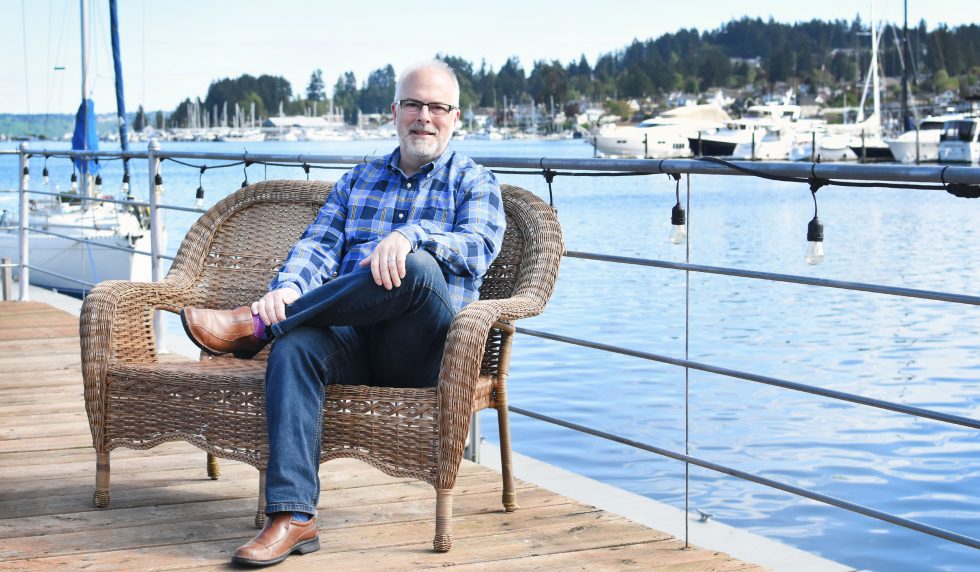
By Doug Lawrence, Managing Broker | Better Properties Gig Harbor

When someone tells me they want to move to Gig Harbor, one of my first questions is usually: What kind of Gig Harbor are you looking for? Because there isn’t just one.
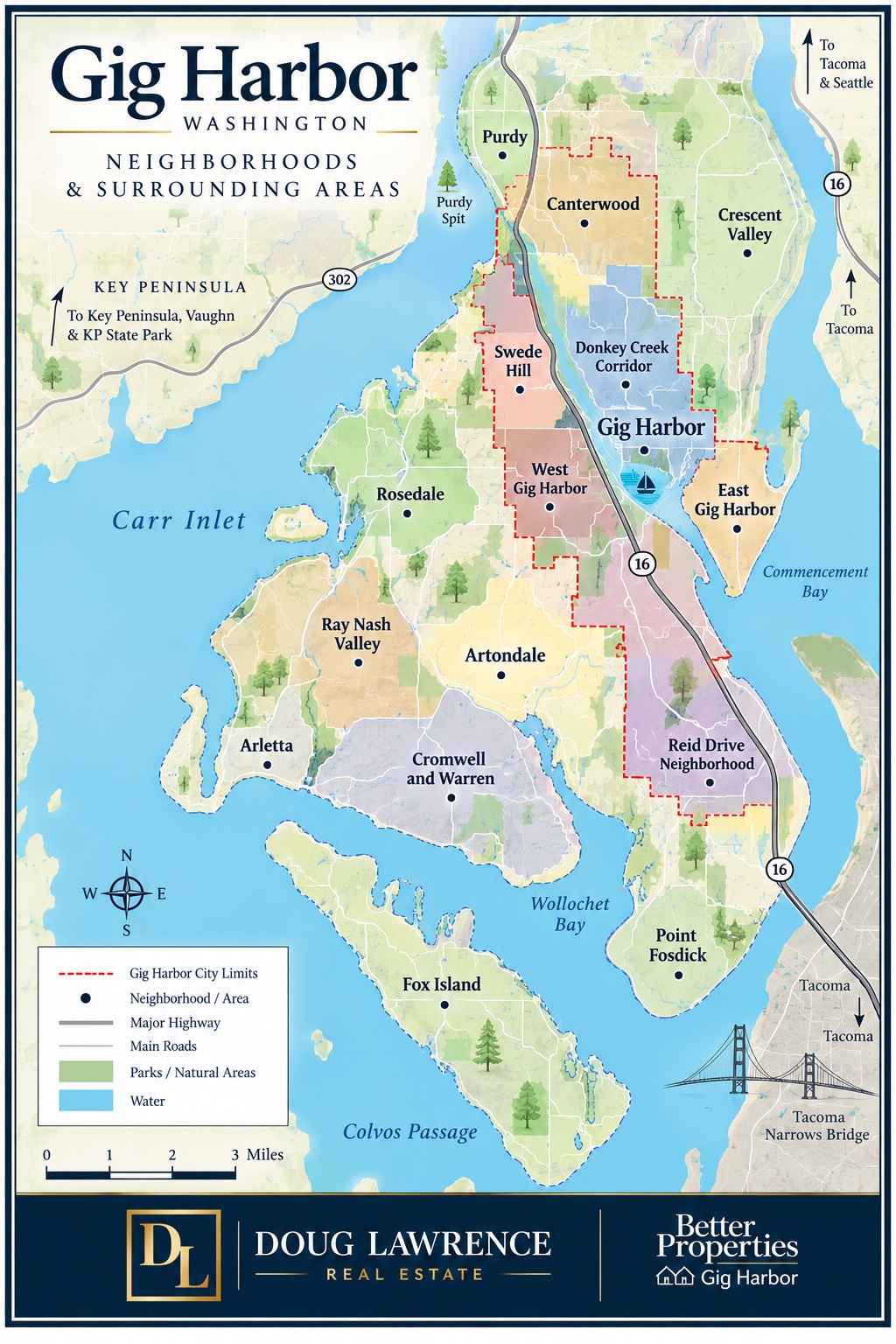
People who are new to the area sometimes think of Gig Harbor as the picturesque waterfront downtown they’ve seen in photographs. And that is certainly part of it. But the greater Gig Harbor area encompasses an unusually diverse collection of neighborhoods and communities—from newer developments and golf-course living to wooded acreage, waterfront enclaves, island homes, and rural properties.

I’ve worked in real estate in this area since 2010, and one thing I’ve learned is that finding the right home here often starts with finding the right part of the peninsula. Here are some of the areas I encourage buyers to explore.

Gig Harbor North: Newer Neighborhoods and Everyday Convenience

Gig Harbor North has seen some of the area’s most significant residential and commercial development. It offers a very different lifestyle from the historic waterfront, with newer homes and planned neighborhoods combined with convenient access to shopping, services, and recreation. This is where you’ll find amenities such as Costco, Target, and the Tom Taylor Family YMCA, along with numerous newer residential communities. It’s also home to Canterwood, one of Gig Harbor’s best-known planned communities. Built around the golf course and clubhouse, Canterwood offers an established residential setting characterized by larger homes, landscaped properties, and community amenities.

For buyers who want convenient access to services and Highway 16 and prefer a planned-neighborhood environment, Gig Harbor North is well worth exploring.

Downtown Gig Harbor: Close to the Heart of the Harbor

For some buyers, Gig Harbor really does mean the harbor. Living near downtown puts you close to the waterfront, marinas, restaurants, shops, and the historic maritime character that gives this community so much of its identity. Homes in and around the downtown area vary considerably. That’s part of the appeal. Rather than a single master-planned community, you’ll find an assortment of older homes, remodeled properties, view homes, and smaller neighborhood pockets. For buyers who tell me, “I want to be close to the waterfront and able to enjoy town easily,” this is one of the first areas we’ll explore.

Point Fosdick, Wollochet, and Artondale

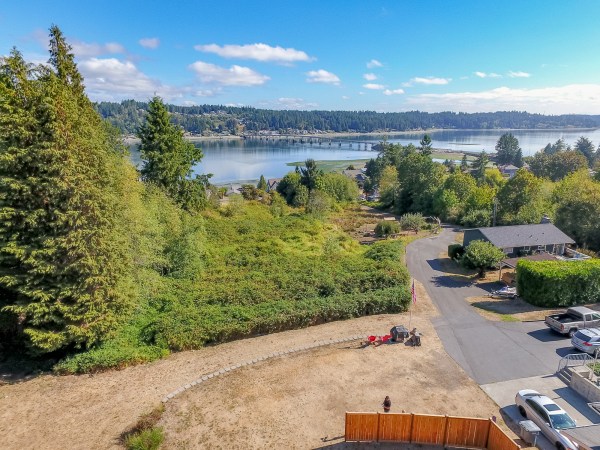
Head toward the southern end of Gig Harbor and you’ll find established residential areas including Point Fosdick, Wollochet, and Artondale. My most recent listing sold in the Wollochet/Artondal area was one we nicknamed “Cottage in the Woods”:
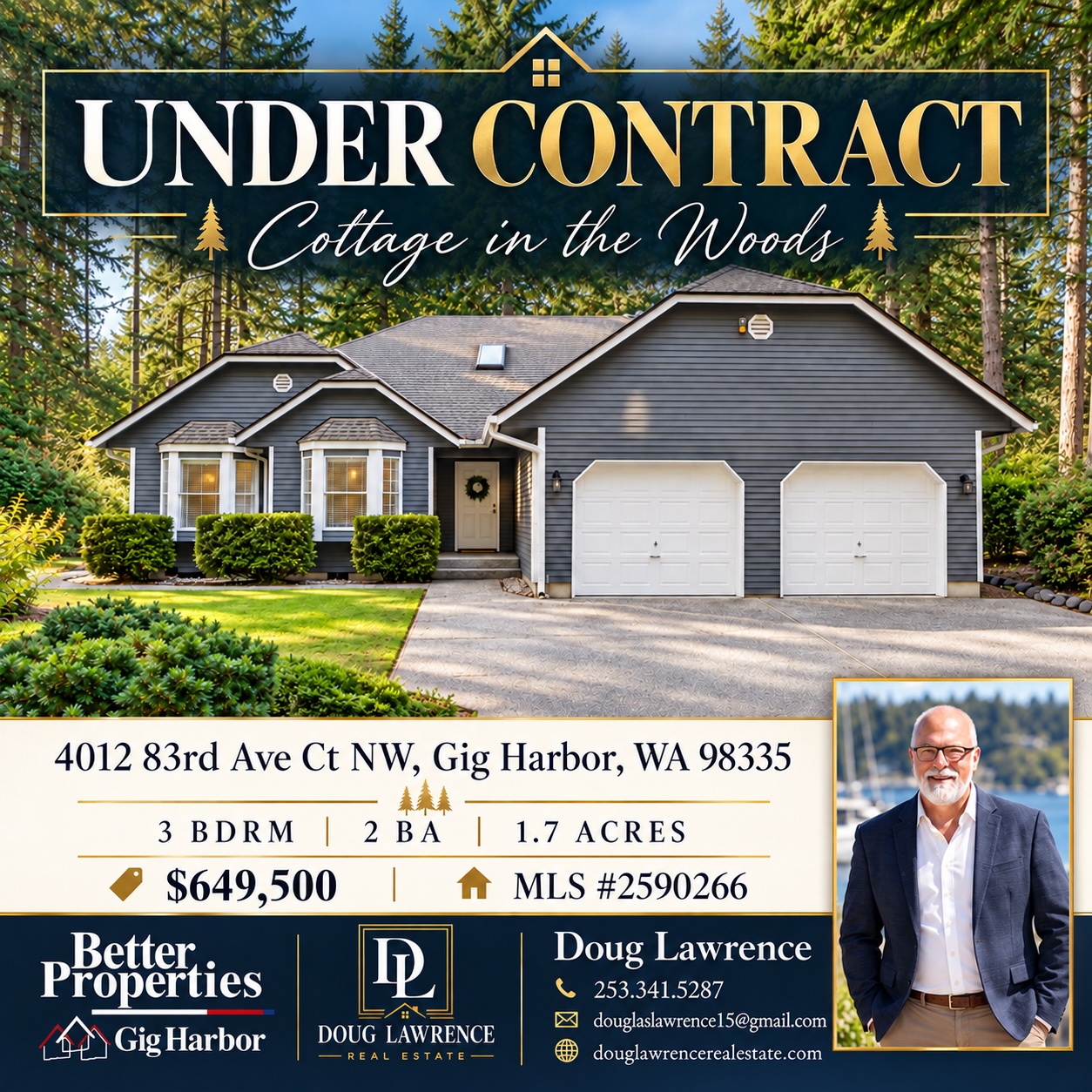
One of the advantages here is accessibility. Highway 16 is close by, yet within a relatively small geographic area, you’ll find everything from wooded residential neighborhoods to waterfront properties and more secluded planned communities. This part of Gig Harbor can be particularly attractive to people who commute toward Tacoma or simply want convenient access across the Narrows Bridge while retaining the quieter atmosphere of peninsula living.

Rosedale: Country Feeling, Close-In Location

Rosedale is one of those places that illustrates why understanding Gig Harbor at the neighborhood level matters. Drive into Rosedale and it can feel surprisingly rural. Mature evergreens, winding roads, larger properties, hobby farms, and wildlife give parts of the area an almost country-like quality, even though downtown Gig Harbor is nearby. The community also retains some of its own neighborhood identity, including Rosedale Market and Rosedale Park and Hall, with its historic community center and recreational facilities. Gig Harbor High School is located in Rosedale.

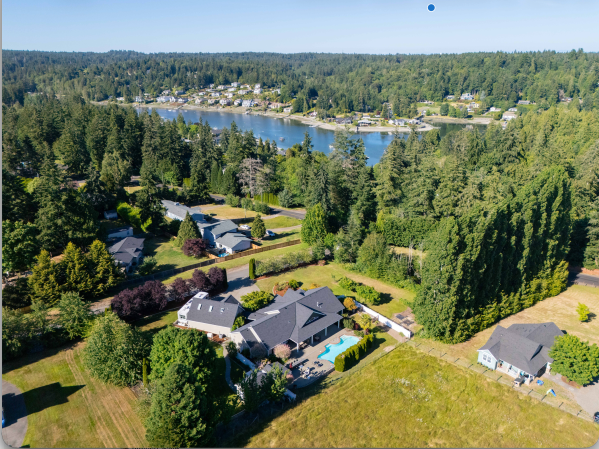
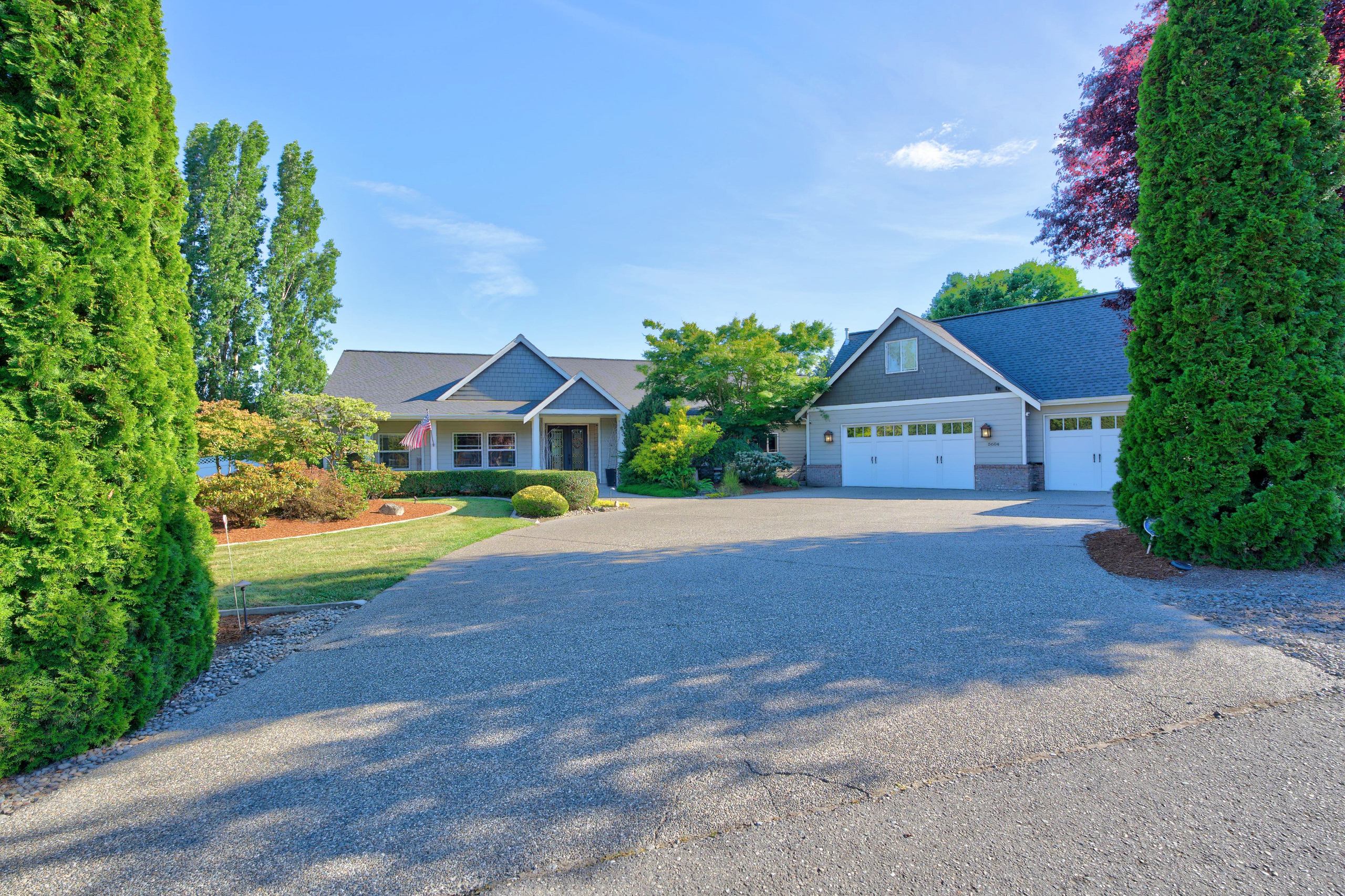
For buyers, Rosedale can offer a particularly appealing compromise: more privacy and room to breathe without giving up convenient access to Gig Harbor. I recently listed and rather quickly sold a beautiful home in Rosedale:

Fox Island: Cross the Bridge and Change the Pace

Cross the Fox Island Bridge and the character changes again. Fox Island is known for wooded properties, quiet roads, shorelines and beaches, and beautiful western sunsets. Housing ranges from modest older homes tucked among the trees to substantial waterfront and view properties. There is relatively little commercial development compared with Gig Harbor, which is precisely what many residents appreciate about it. The historic Fox Island Schoolhouse, known as the Nichols Community Center, is on the national historic register and is home to FICRA, a local organization dedicated to providing social, educational, recreational, safety, and other valuable resources to Island residents.

For buyers who want to feel removed from town—but don’t necessarily want to live an hour away from it—Fox Island can offer an interesting alternative. I recently sold a lovely Fox Island home on a wooded, near-acre lot close to the bridge:
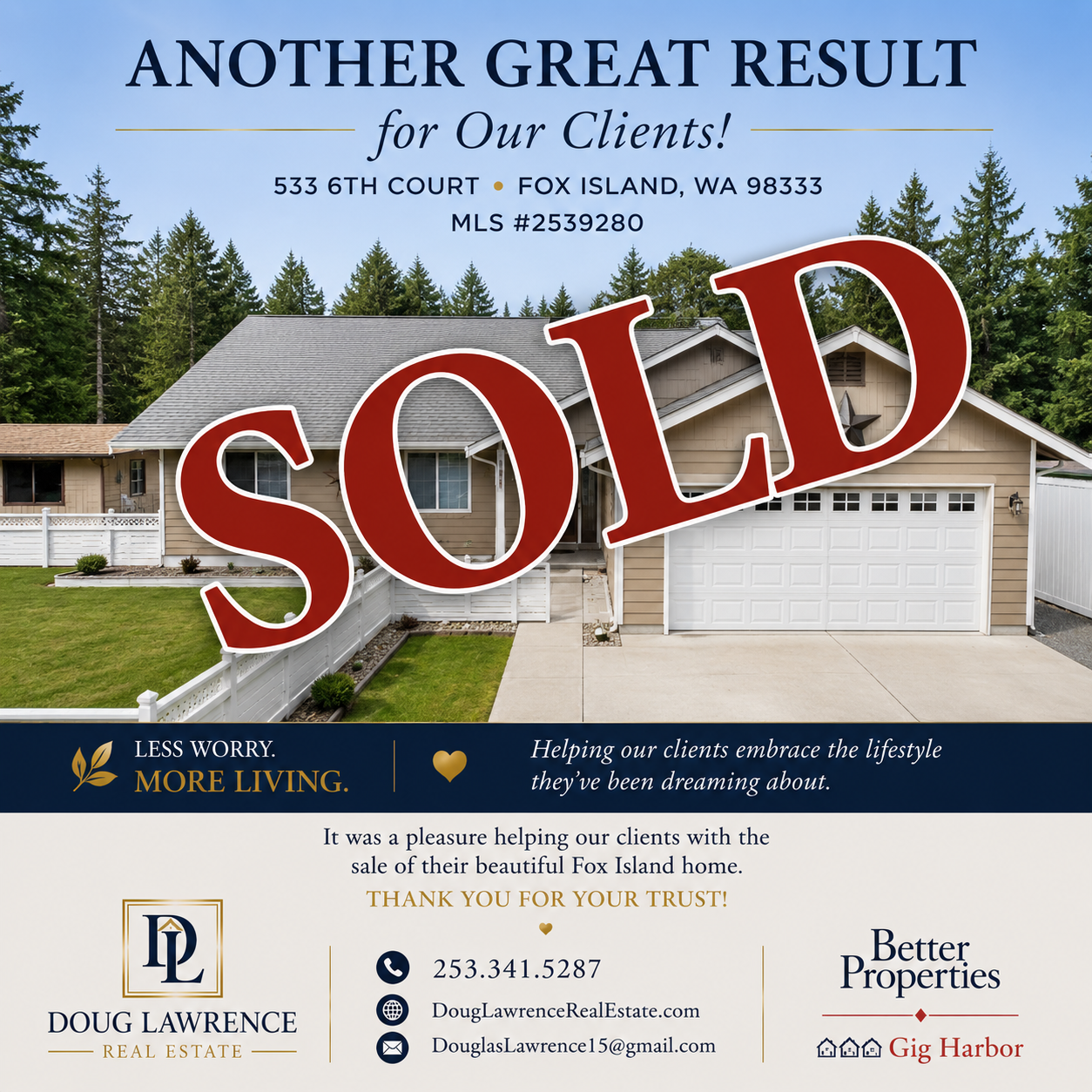
Arletta, Warren, Cromwell, and the Waterfront Communities

The shoreline surrounding greater Gig Harbor contains numerous smaller communities that people moving here may never have heard of. Among them are Arletta, Warren, Cromwell, and Bayview, some of the area’s historic communities dating back to the late 19th century. These are the kinds of places where local knowledge becomes particularly useful. Here you’ll also find beautiful Horsehead Bay, and the charming and convenient Arletta Store, right across the street from PenMet’s newly renovated Arletta Park with its ball field and historic clubhouse.

Purdy and Key Peninsula: A Gateway to More Space

Continue west toward Purdy and the landscape begins changing again. Henderson Bay forms something of a geographic transition between Gig Harbor and the more rural Key Peninsula. Cross the Purdy Bridge and you are heading toward communities where larger lots, acreage, open spaces and a slower pace of life become increasingly common. Peninsula High School is located in Purdy, close to the bridge.

For someone who wants access to Gig Harbor but doesn’t necessarily need to be in Gig Harbor proper, this broader area can open up some interesting possibilities. Two homes may both have a “Gig Harbor” address while offering very different commutes, water access, lot characteristics, and neighborhood environments. That’s why I encourage buyers not to search by ZIP code alone.

This is an area worth considering for buyers dreaming about acreage, gardening, a workshop, a small homestead, or simply more distance between themselves and their neighbors. Just this week I sold one of my listings in this area:
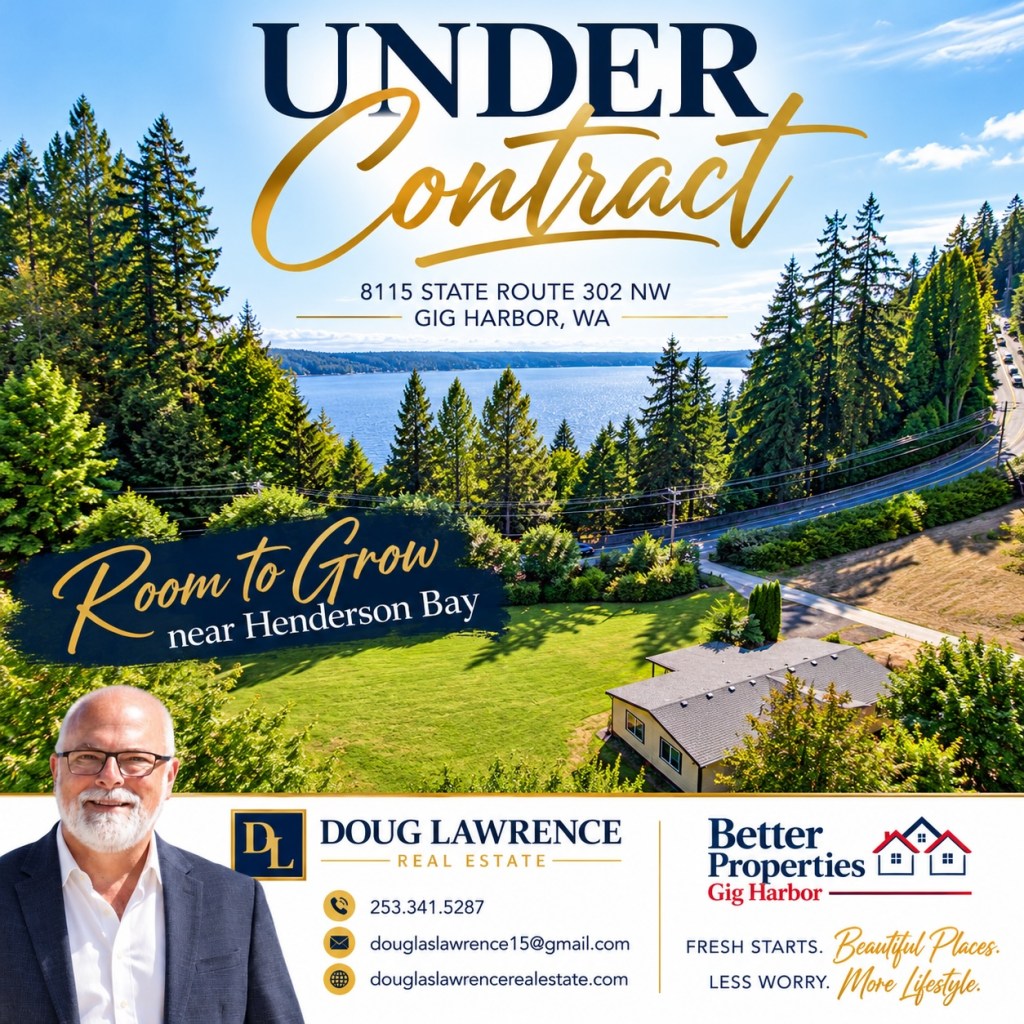
Outdoor recreation is part of the appeal of the Key Peninsula as well. Penrose Point and Joemma Beach state parks provide opportunities for boating, camping, beachcombing and other outdoor activities. The tradeoff, of course, is distance. Depending on where you live on the Key Peninsula, getting to Highway 16, major shopping, and other services can take longer. For some buyers that’s an inconvenience. For others, it’s exactly the point.

The Right Gig Harbor Depends on the Life You Want to Live

All that to say … I don’t think a Gig Harbor home search should begin with bedrooms, bathrooms, and square footage alone. It should begin with lifestyle. Do you want to walk near the waterfront? Do you need easy freeway access? Would you trade a shorter drive for a larger piece of land? Do you want neighbors nearby, or would you rather see trees outside your windows? Do you need a shop? Are you looking for waterfront—or simply want to live close enough to enjoy it? Those answers can lead us to very different parts of the peninsula.

And that’s one of the things I enjoy most about selling real estate here. Within a relatively small area, Gig Harbor offers a remarkable number of ways to live.

If you’re considering a move within Gig Harbor—or moving here for the first time—I’d be happy to help you figure out which neighborhood fits the life you’re looking for.

Doug Lawrence, Managing Broker
Better Properties Gig Harbor
253.341.5287
douglaslawrence15@gmail.com
douglawrencerealestate.com
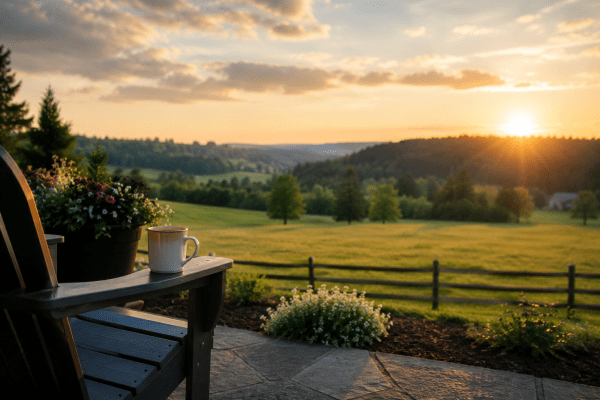
More Space. More Freedom. More Ways to Live Well.

For a long time, one version of the American dream was the planned neighborhood: attractive homes, tidy streets, community amenities, and an HOA making sure everything stayed that way.

For plenty of homeowners, that still works very well. But I’m hearing something different from some buyers lately, especially people who have already done the subdivision or gated-community lifestyle—they’re ready for a little breathing room.

They want a yard where the kids can play without worrying that they’re bothering the neighbors. They’d like to have friends over around the pool without feeling as though everyone on the street can hear them. Maybe they want a boat, an RV, a garden, a workshop, a dog that likes to run, or simply enough distance between houses that they don’t feel like they’re living on top of one another. (Or chickens, anyone?)

And some are simply tired of paying an HOA to tell them what they can and can’t do with their own property.

There’s some evidence behind what I’m seeing. In the National Association of REALTORS®’ 2025 research, 17% of all buyers said the availability of larger lots or acreage influenced their choice of neighborhood. Among buyers ages 35–44, that jumped to 24%, and it was 21% among buyers ages 45–59.

A 2026 Pew Research Center survey found something even more striking: A majority of Americans prefer communities where homes are larger and farther apart rather than smaller and closer together. Among people already living in suburban communities, 55% preferred the more spread-out option; among rural residents, that rose to 70%.

At the same time, HOAs are becoming harder to avoid. Realtor.com reported that 43.6% of homes listed for sale in 2025 had an HOA fee, up from 34.3% in 2019. Even among single-family homes, about one-third of listings had an HOA.

That doesn’t make HOAs bad. They can provide valuable amenities, maintain common areas, and help protect neighborhood standards. But they aren’t for everybody.

The Sweet Spot: Country Living Without Being Too Far Out

The challenge around Gig Harbor is finding that sense of space and independence without giving up the convenience that makes Gig Harbor such a great place to live. That’s one reason I think the home I’m currently representing at $1,575,000 deserves another look.

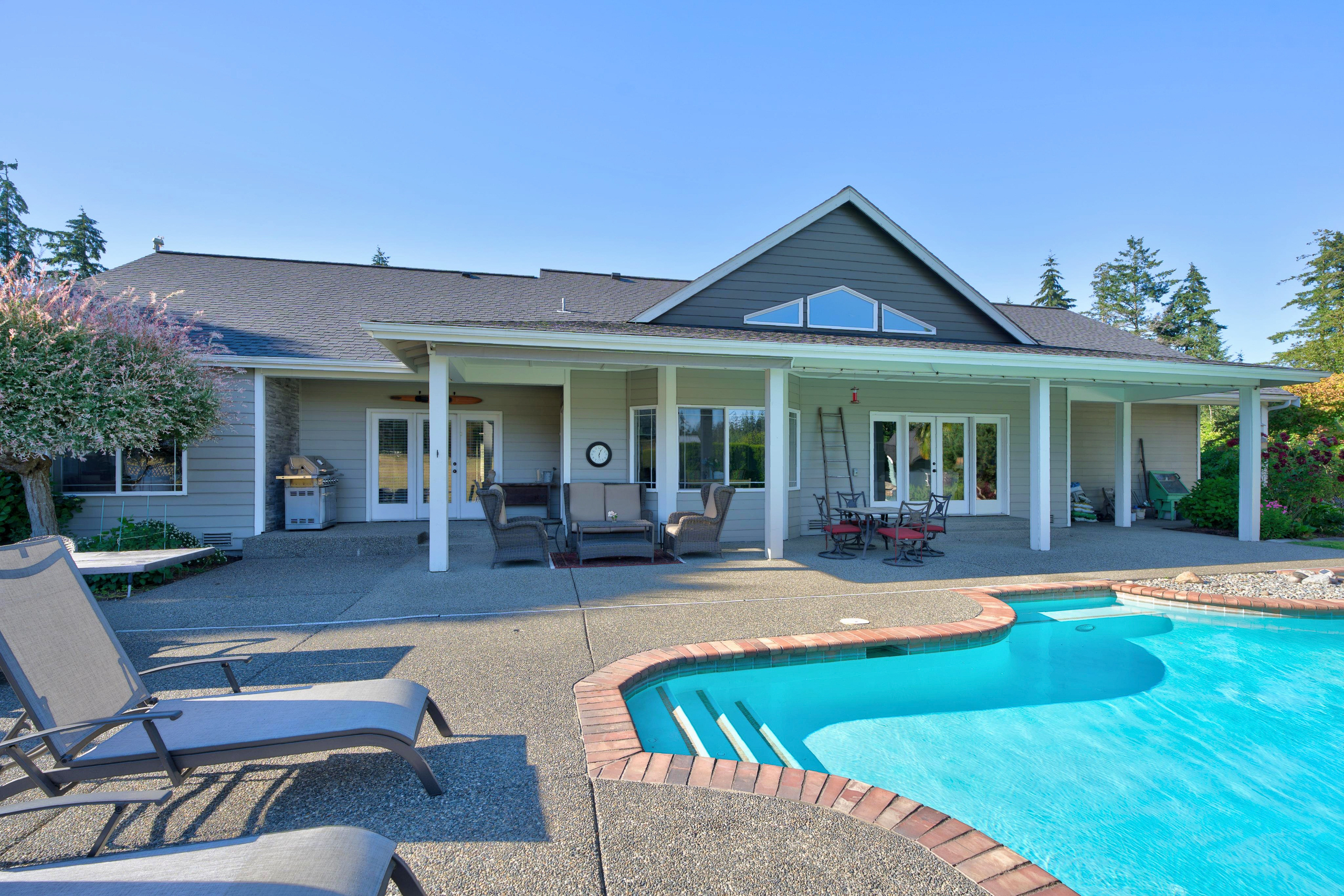
It sits on a shy acre in a rural-feeling setting, yet it’s close in to Gig Harbor. There’s room to spread out, beautifully landscaped grounds, a private resort-style swimming pool and covered outdoor living area, and a home designed for both everyday living and entertaining.

There’s a public boat launch a block over from the end of the road, providing access to Wollochet Bay. If boating, kayaking, paddleboarding, fishing, or simply being close to the water is part of the lifestyle you’re looking for, that adds to the appeal of this versatile property.

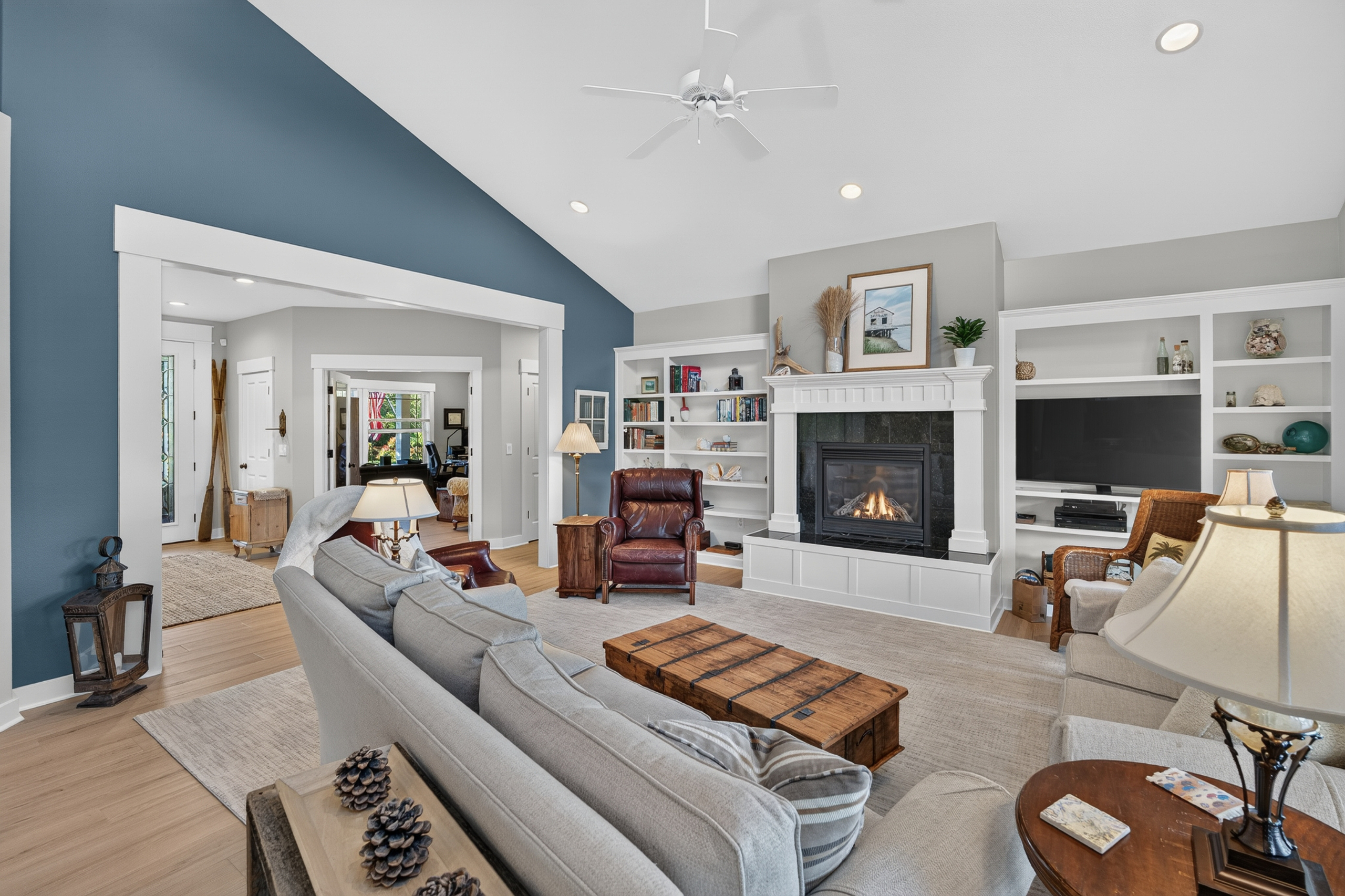
Inside, the home offers a vaulted great room, a large kitchen, a luxurious primary suite, and flexible spaces that can adapt as a family changes. The second bedroom features a full bath with hall access. There’s also finished living space over the garage with its own bath and kitchenette—ideal for guests, extended family, older kids, hobbies, or a getaway space. All hat flexibility is becoming increasingly relevant. NAR reports that 17% of homes purchased in its latest study were bought for multigenerational households, an all-time high.

To me, that’s really the appeal of this property; More space. More freedom. More ways to live well.

You can have the kids and grandkids over. You can entertain around the pool. You can keep the boat nearby and be on Wollochet Bay in minutes. You can enjoy some elbow room without moving miles away from town.

If you’ve been thinking that your next move might be out of the subdivision rather than into another one, this may be the kind of property worth seeing with fresh eyes.

MLS #2543131 | Offered at $1,575,000
Doug Lawrence, VAMRES, Managing Broker

Better Properties Gig Harbor
253-341-5287

Today’s Luxury Buyers Aren’t Looking for Bigger Homes. They’re Looking for Better Living.

If there’s one trend I’ve watched reshape the luxury housing market over the past several years, it’s this: buyers are placing less emphasis on square footage and more emphasis on lifestyle.

That might sound surprising in an era when larger homes once dominated wish lists, but today’s buyers are asking different questions.

Instead of, “How big is it?” they’re asking, “How will this home improve the way we live?” The answer often has very little to do with the number of bedrooms. Luxury today isn’t about excess—it’s about intentional living. More buyers are looking for homes that allow them to slow down, entertain family and friends, enjoy their surroundings, and spend less time maintaining a property and more time experiencing it.

Privacy, in particular, has become a premium. Outdoor living has become an extension of the home. Single-level living has become desirable not only for retirees, but also for busy professionals who appreciate convenience and are planning ahead. And more and more, people want spaces that are beautiful, functional, and built around everyday enjoyment—not just special occasions.

Buyers Are Investing in Lifestyle

I’ve noticed that many buyers are making decisions based on how they envision spending their weekends rather than simply comparing square footage or price per foot. They imagine:

  • morning coffee on a covered patio
  • summer afternoons by the pool with grandchildren
  • hosting holiday dinners where the kitchen naturally becomes the gathering place
  • parking the RV without worrying about storage fees
  • welcoming overnight guests without giving up their own privacy

These lifestyle features create lasting value because they improve daily life in ways that can’t be measured on a spreadsheet.

A Perfect Example

One of my current Gig Harbor listings captures this shift beautifully. Set on nearly an acre just minutes from downtown Gig Harbor, this property offers the privacy and serenity of country living without sacrificing convenience.

The centerpiece is a resort-style swimming pool surrounded by beautifully landscaped grounds, creating an outdoor retreat that feels more like a private resort than a backyard. A spacious covered outdoor living area extends the enjoyment well beyond sunny summer afternoons, providing the perfect setting for entertaining throughout much of the year.

Inside, the home continues the same thoughtful approach. The vaulted great room is filled with natural light and flows effortlessly into a gourmet kitchen designed for gathering rather than simply cooking. The luxurious primary suite offers comfort and privacy, while the bonus suite above the garage provides ideal accommodations for guests, extended family, or a private home office.

Perhaps one of the most valuable features is something many buyers don’t fully appreciate until they’ve experienced it: true one-level living. Daily life becomes easier when the primary living spaces are all on one floor, while the bonus suite over the garage remains available when guests come to visit.

It’s a home designed to support the way people actually live—or want to live.

Close to beautiful Wollochet Bay

Looking Beyond the Numbers

Real estate has always been about more than bedrooms, bathrooms, and square footage. The homes that create the greatest satisfaction over time are the ones that fit a family’s lifestyle.

As a managing broker, I believe one of my most important responsibilities is helping clients look beyond statistics and envision how a property will serve them for years to come:

  • Will it make everyday living more enjoyable?
  • Will it create opportunities to gather?
  • Will it provide peace and privacy?
  • Wll it enable us to live a lifestyle we envision and value?

Those are the questions that today’s thoughtful buyers are asking. They know they are not simply purchasing a home; they’re investing in the life they want to live. And, that’s exactly why exceptional lifestyle properties like this one continue to stand apart in any market.

If you’ve been looking for a home that offers luxury without pretense, privacy without isolation, and a true resort-style lifestyle just minutes from Gig Harbor, I’d be happy to show you this remarkable property.

Current Offering: $1,675,000
MLS #2543131

Doug Lawrence
Better Properties Gig Harbor
📞 253.341.5287

Why NW Buyers Are Looking beyond Seattle

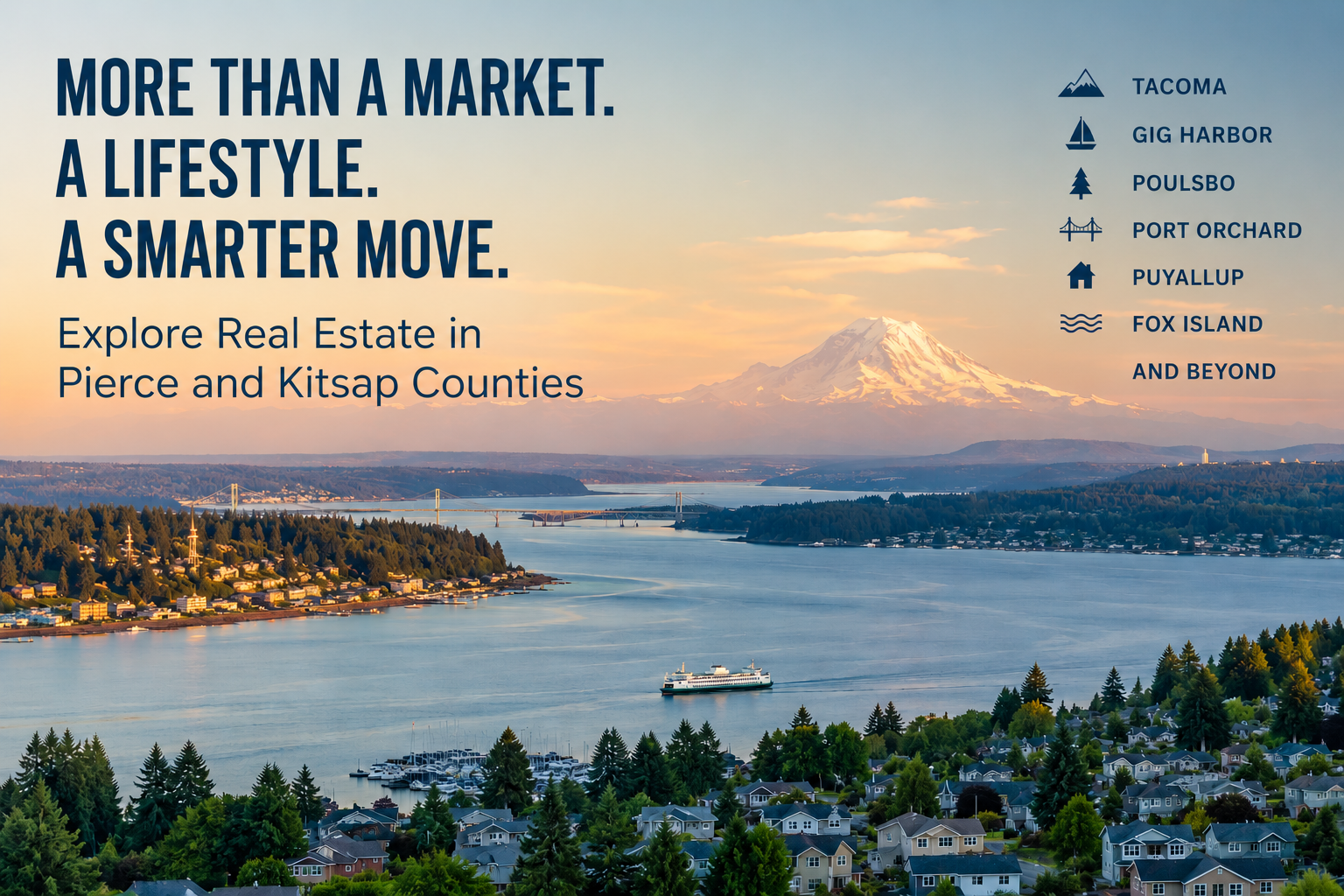
For years, real estate conversations in Western Washington have centered on Seattle. While the Seattle market remains influential, many buyers today are discovering that some of the region’s most compelling opportunities can be found throughout Pierce and Kitsap counties.

Having worked with buyers and sellers across the South Sound since 2010, I’ve watched these communities evolve from alternatives to destinations in their own right. What attracts people today isn’t simply affordability—it’s the combination of lifestyle, accessibility, and long-term value that many buyers are seeking.

One of the most significant shifts over the past decade has been how people think about location. Largely since the COVID pandemic that brought work-from-home to the forefront, today’s buyers are no longer focused solely on minimizing commute times to a single employment center. Remote and hybrid work arrangements have expanded the search area for many households, allowing them to prioritize quality of life, outdoor recreation, community character, and housing options that better fit their goals.

As a result, communities throughout Pierce and Kitsap counties have experienced growing interest from buyers who want more space, different neighborhood options, or closer proximity to the natural beauty that defines the Pacific Northwest.

The diversity of housing opportunities across the region is one of its greatest strengths. Buyers can explore established neighborhoods in Tacoma, Fircrest, and University Place, growing communities such as Puyallup and Bonney Lake, waterfront and maritime communities throughout Gig Harbor and Port Orchard, or the unique lifestyle offered by communities across the Kitsap Peninsula. Each area offers distinct advantages, and understanding those differences is critical when making a long-term real estate decision.

Population growth has also continued to support housing demand throughout the broader Puget Sound region. Pierce County has added substantial population growth since 2010, while regional planning projections anticipate continued demand for housing throughout the coming decades. At the same time, housing supply remains a challenge in many communities, contributing to continued interest in well-positioned properties.

What often gets overlooked in national real estate headlines is that real estate remains intensely local. Two homes with similar features can perform very differently depending on neighborhood trends, school districts, transportation access, local development patterns, and community amenities. That’s why local experience continues to be one of the most valuable resources for buyers and sellers. Over the past fifteen years, I’ve had the opportunity to work with clients throughout the South Sound and have seen firsthand how different communities grow, adapt, and create value over time.

Whether you’re considering a move across town, relocating from another part of Washington, or evaluating opportunities throughout Pierce and Kitsap counties, understanding the local market is about more than tracking prices. It’s about understanding communities, recognizing trends, and finding the right fit for your goals.

The Pacific Northwest continues to attract people who value opportunity, natural beauty, and community. Pierce and Kitsap counties remain at the center of that story. If you’re buying or selling, give me a shout; let’s explore the possiblities.

— Doug Lawrence

What You Need to Know About Relocating

Moving, whether across town or across the country, can evoke a blend of excitement and dread. New job? New digs? New scenery?  Hooray! Good-bye to friends and family? Loss of familiar routes and routines? The hassle of packing, moving, and setting up in a new location? Perhaps not so exciting.

One thing I’ve learned over the years is that “what you focus on expands.” Sure, you need to address the downsides. But by focusing on the upsides, your positive perspective will make all the difference in the world. Just think: you’ll get to explore a whole new place and all that that new place has to offer! There’ll be new activities, new restaurants, new friends, new parks, and more.

With that in mind, here are some suggestions about the kinds of things you’ll want to research before or during your move process:

1. What amenities are available in the new location and how important are they to your lifestyle?

The area or neighborhood you live in makes your home what it is. Check out Google Maps before your big move. Maybe even make a list of the advantages and disadvantages to each area you research—it can help make the decision easier. If your kids are in school, you’ll likely want a school facility close by. Do you want them to attend a private or public school? Is there one close by? What about grocery shopping? Is it easy to get to? Do you like to have a gym you can walk to? Are there parks? Ask yourself these questions ahead of time. Determine their importance to you and your family.

2. What is there to do in the new location (e.g., recreation and events)

Find out what big events and attractions there are. If your family is into skiing or mountain biking (or any other sport/activity), look to see if there is a place close by where you can participate. What events are there coming? (Finding activities and fun events to look forward to can lessen the impact of a move, such as moving far away from friends and family.)

3. How much does it cost to live in the new location? (Be prepared.)

Cities come with different price tags, as far as cost of living goes. Make sure you know what you’ll be spending before you commit. Gas and grocery price can be different in different regions. Calculate what you can expect to spend in your new city—how does that work for your budget? Shrewd financial planning in advance can make all the difference in avoiding future panic or crises.

4. Plan how you’ll connect once you get there. What are ways you can meet people in your new location? A sense of community and belonging is the first and best way to feel settled and “at home.” Some of this may come from a job or school, but not all of it.  Where can you find likeminded new friends to share life and experiences with? Is there a faith community you can connect with? Civic clubs? Non-profits and community service organizations you can join or volunteer with? Sports teams/fitness clubs you can join? Jumping in to environments like these can make the integration process go much more quickly.

My motto is “love where you live,” and there are so many ways you can help make this happen for yourself and your family when a relocation is involved. I hope these have been helpful; they are only a start.

If you are anticipating a move and have real estate needs as a part of the package, I hope you’ll give me a shout or send an email. Even if you’re moving across country or in another town, I can help with referral and connection to a trusted real estate professional in my network. I’ll do my best to help you and your family “love where you live,” wherever that may be!

Doug Lawrence is a licensed broker with Keller Williams West Sound. He is a certified Veterans and Military Relocation Specialist and a Global Property Specialist. No matte where your move may take you, he can help! You can reach him through this site, by email at dlawrence@kw.com, or by phone/text at 253.341.5287.  

Amazing Views of Hales Passage from Ready-to-Build Fox Island Lot!

Have you been thinking of view property on beautiful Puget Sound in Washington State? Look no further than this: the development has already been done . . . so bring your plans and get going on the water-view house you’ve been dreaming of!

From your vista on desirable Bella Bella Drive on Fox Island, you’ll enjoy unobstructed views of Hales Passage and the Fox Island Bridge. The over 1/4-acre lot is level and has been fully cleared; a three-bedroom septic has been installed and water and electricity are already to the property.

$299,950

Offered by Doug Lawrence and Keller Williams West Sound
MLS#1358855
224 B Bella Bella Dr, Fox Island 98333.

Call for showing; listing agent must be present at initial viewing to highlight all the incredible amenities of this exclusive property. 253.341.5287
dlawrence@kw.com
www.douglawrencerealestate.com

Offers: Seller intends to review offers upon receipt.

Doug Lawrence is a Fox Island resident whose motto is “Love Where You Live!” He especially enjoys the opportunity to offer others a chance at the “island living” enjoyed by residents on Fox Island. You can find out more about Doug and Fox Island living at www.foxisland.net and www.visitgigharbor.com.

Home Improvement: What Can You DIY?

Did you know there are a ton of things you can do to improve the value, quality, and livability of your home–without having to call in (or pay for) a professional?  That’s the point of DIY – “Do It Yourself!”

For some, this is no problem. For others, who may feel like they are all thumbs when it comes to “hands on” or creativity, it might not feel that easy.

Well I’m here to tell you it is! (Or it can be, anyway.) Just pick your projects carefully. Don’t start with remodeling the bathroom if you’ve never DIY’d before. But I’d say that, from decorative crafts to furniture to gardening, nothing is out of reach for the committed Do-It-Yourselfer.

If you’re looking to save money on home improvements, DIY is definitely the way to go. But even if money if no option, DIYing can provide a tremendous amount of satisfaction in self-sufficiency, creativity, and even therapy as you hone your skills.

For me, DIY is my creative outlet. Over the years, I’ve enjoyed building my woodshop, adding to my collection of tools and slowly but surely taking over the garage. (I can proudly say it’s the one place in the household that’s “all mine.”)

If DIY is something you’d like to try your hand at (or improve your skills with), here are some good websites that can provide encouragement and how-tos: *

1. April Wilkerson

This is my personal favorite–April is an engaging, creative individual who makes tackling any DIY or home construction project with a can-do attitude and a sense of fun. Check out her YouTube channel for inspiration and how-tos.

2. Instructables

Like many of the resources on this lister, Instructables is made by DIYers, for DIYers. That means nearly all the project plans and instructions are contributed by members of the community. Most Instructables feature clear instructions with plenty of pictures, along with detailed parts and materials lists. The active community offers suggestions and variations via lively comments beneath each project. If you can follow a recipe, you can follow an Instructable.

3. Make:

Make: is a quarterly print journal and a webzine. Each themed journal is stuffed with clever DIY projects for tinkerers of various skill levels. The website also includes a store, “The Maker Shed,” with books, journals and plenty of starter kits, perfect for beginning gizmo DIYers.

4. Apartment Therapy

“Saving the world, one room at a time” is Apartment Therapy’s official slogan, but it could also be “high design for small budgets.” The website features tips and advice for every room of an apartment or house, and lots of DIY projects for clever storage and sharp décor. The how-tos aren’t quite as thorough as those found on Instructables, but the projects are a little more polished.

5. Ana White

Ana White features a giant collection of furniture project plans from DIY doyenne Ana White and members of the community. Projects are sorted by type, skill level, style and room. Ana’s plans are typically detailed and well-illustrated. Contributor plans can be less refined in presentation, but still easy to follow. DIYers who make something following plans from the site are encouraged to share their results, too. They are often even more impressive than the originals.

6. The Family Handyman

The Family Handyman features simple projects and DIY home maintenance tips and advice. While the website offers plenty of how-tos and information, you’ll need a subscription (digital or print) to unlock all of the magazine’s instructions and resources.

7. Mother Earth News

From baking bread to solar rooftops, Mother Earth News has been covering the DIY scene in print and online for decades. The site and magazine feature lots of tips and advice about sustainable living, from growing and preserving food, to living off the grid. DIY projects range from sundials to solar food dehydrators.

What are some DIY projects you’ve tackled?  I’d love to hear! And if you feel inspired by any of these sites to tackle a project in your own home, please share. Good luck!

Doug Lawrence is a licensed real estate broker and avid DIYer. He’s proud to have inherited his love of tools and woodworking from his dad, Ken, along with a great collection Ken’s tools to add to his own woodshed. Current projects include a farmhouse table for the kitchen and a corn-hole game for family fun next summer! You can find Doug at www.douglawrencerealestate.com where he’d be happy to answer your questions about buying, selling, and investing in real estate in the Great Pacific Northwest … or about DIY!

* List of websites adapted from article by Lars Peterson, US News and World Report, April 2015

(c) 2018 Doug Lawrence. All Rights Reserved.

A New Grocery Store for Gig Harbor!

The last couple of years have been a bit tumultuous on Gig Harbor’s grocery store scene(!). Local shoppers watched not once but several times as stores came, went, came, and went: Safeway became Haggens and became Safeway again. (That one was almost comedic.) Main & Vine opened to packed crowds a couple of years ago, then closing abruptly in early January 2018 to give way to the new Fred Meyer store across the street at Gig Harbor’s most recent development, Olympic Towne Center.

When completed, Olympic Towne Center will be a 57,000-square-foot complex with restaurants (welcome Hop Jack’s, already open), bowling alley, gaming rooms, high-tech meeting facilities, and spaces for visitors to gather to enjoy wine, coffee, and or just hanging out. The developer of Olympic Towne Center, Troy Alstead, is the former COO of Starbucks, who left the international coffee scene to pursue this and other opportunities. He, his wife, and their four children are Gig Harbor residents.

“I grew up in the Puget Sound region and always have loved the mountains and beaches. I backpack in the Olympics and Cascades, scuba dive in the Sound, and at every opportunity enjoy this place around us,” Alstead said in an interview with the Tacoma News Tribune. “We have a responsibility to ensure that all this will still be around to be enjoyed by future generations.”

Troy Alstead may be the most high profile Gig Harbor entrepreneur, but he is certainly not the only one. In recent years, the region has seen new start-ups such as the Olalla Vineyard and Winery, Heritage Distilling Company, Ohana Coffee, Seven Seas Brewery, Wet Coast Brewery, and Zog’s on Fox Island. All that is great news for this rapidly-growing community. In 2016, Gig Harbor experienced a growth in population from 8500 to 9200 within the city limits, and was expected to reach 10,000 in 2017, two years ahead of the city’s previous projections for growth.

That growth was sure evident at the opening of the new Fred Meyer story on January 10th. This writer spent a good twenty minutes circling the parking lot trying to get a spot.  At last—success!  The free samples and cherry-picker specials provided a festive atmosphere and made up for the long lines at the checkout stand. But no one seemed to mind that.  More than anything, it was a resounding community welcome to a new neighbor. And in a small town, which thankfully Gig Harbor still is in many ways, a new grocery store and new neighbors are still a big deal.

Doug Lawrence is a Fox Island resident and licensed broker with Keller Williams West Sound in Gig Harbor. You can put his expertise and love for this region  to work for you for all your real estate questions and needs. www.douglawrencerealestate.com 

Love Where You Live – Volcano Edition

It all started out as a hope-to, an item I wanted to check off my bucket list: to climb a mountain.

I’ve always thought climbing a mountain was a big, hairy audacious goal that many people talk about but never do. I wanted to separate myself from the pack and be one of the few that do it. So, on July 26th, I had the great pleasure (wait, did I say pleasure?), I mean, I had the great gratification of summiting Mount Saint Helens in Washington State.

I picked Mt. St. Helens as my mountain of choice because it’s a true mountain, achievable with only a moderate amount of gear and training. On the surface, it seems like a moderate-to-hard hike; after all, it is “only” five miles up—two through forest, two across a massive boulder field, and one straight up through loose scree (small, gravelly volcanic rubble). It’s the 8,500-foot elevation gain that really knocks the wind out of your sails and gives you pause to consider (or reconsider) most things in your life.

Looking back down at the one-mile stretch of scree

It’s one of those things that’s hard to explain unless you’ve experienced it, or something like it. All that being said, that moment when you reach the top of the mountain—the cloudless sky, the limitless view, the surrounding peaks, breathing all that in, absorbing it, contemplating it, pondering it—makes the trek more than worth it.

On top of the world (looking down at the lava dome, Mount Rainier in the distance)

Mount Saint Helens is noteworthy for its huge eruption in 1980, and is still an active volcano. Standing on the precipice, looking down at the lava dome with plumes of steam seeping out of it, was magnificent. For me, it was a bit of a full circle, having been nearby in 1980 when the mountain erupted. A high schooler at the time, I had been down in the Longview/Kelso area visiting my brother. I slept obliviously through the eruption, to be greeted on awakening the next morning by swollen rivers, a sky full of ash, and horrific traffic jams of panicked and/or curious residents and onlookers. Nearly forty years later, all that’s just local history. But it was very cool to come back and see how quickly the mountain has repaired itself, its beauty and majesty restored.

Whether you live in the shadow of a volcano as I do, there are adventures to be explored in your neck of the woods, as well. Please comment and share your stories: how do you love where YOU live?

Doug Lawrence is a professional real estate broker with Keller Williams West Sound in Gig Harbor, Washington.  Doug’s motto is “Love where you live!” Whether you’re looking to buy, sell, or invest, he’ll put his appetite for adventure and challenge to work on your real estate transaction when he’s not applying it to a mountain.  You can find him at http://www.douglawrencerealestate.com or by phone or text at 253.341.5287.

(c) 2017 Doug Lawrence. All Rights Reserved.


Think You Can’t Afford It? Think Again.

September means back to school, back to routine, and back to . . . home shopping?  Yes, for many folks!

Although, as I mentioned last month, this has been a challenging market lately, affording the mortgage payment for the house they want IS possible for many prospective homeowners. Why then, by all accounts, is a sense of “unaffordability” plaguing the market?

Researchers at Freddie Mac offered several answers to that question in its latest Insight, the first one being perception. Homebuyers struggling to find reasonably-priced listings perceive the housing market in general as unaffordable — a reasonable conclusion, if their only options to date have been out-of-reach stock.

Secondly, the high likelihood these days for competition (i.e., “bidding wars”) is off-putting, both for first-time homebuyers and for sellers re-entering the market. The hesitation of these would-be sellers is notably tamping down already tight inventory.

“Thanks to very low mortgage rates, monthly mortgage payments are affordable for the average household despite currently high house prices,” says Sean Becketti, chief economist at Freddie Mac. “Nevertheless, hurdles to homeownership arise from the difficulty of finding a house. The supply of homes for sale is very tight, especially starter homes, and underwriting requirements are more rigorous than they were in the past.”

Would-be homeowners are also not confident about their prospects because their incomes have stayed relatively flat compared to home prices. Incomes have grown by an average 2.4 percent annually since 2012; home prices, however, have grown an average 6 percent.

“Many potential first-time borrowers are stymied by variable employment and income histories and the challenge of accruing a down payment while simultaneously paying down their student loans,” Becketti says. “In fact, a high level of household debt, particularly student debt, poses perhaps the largest obstacle to first-time homebuyers.”

Homeownership — stripped down to just the mortgage payment — is affordable, the researchers concluded, but challenged by barriers that play a hefty role in the home-buying process. Perception, after all, is reality.

Are any of these factors playing into your decision to buy or not buy, to sell or not sell?  I’d be happy to talk through with you how these issues might affect you (or not), and help you find workable solutions for your unique home-buying or home-selling situation. After all, I’m here to help you “love where you live!” ~Doug

Doug Lawrence is a licensed broker with Keller Williams West Sound in Gig Harbor, Washington. You can find him at http://www.douglawrencerealestate.com, or by email at dlawrence@kw.com, or by phone at 253.341.5287

Source: Freddie Mac , Photo by 2.0 Generic

SaveSave

SaveSave

SaveSave