
Overcoming Deferred Maintenance: Prepping a Fixer for Sale

So, you want to sell your house, or maybe someone else’s house—an aging or deceased relative, for example. And, for whatever reason, the property has experienced “deferred maintenance.” It needs a lot of work!

Bringing a “fixer” home up to a sellable standard can seem overwhelming sometimes, especially when it needs significant improvements. Getting top dollar for a property that needs work can be challenging, especially if your budget for improvement is tight. That being said, with the right perspective, some creativity, and strategic emphasis on the right things, it can be done—for less time and money than you probably think.

Where to Get the Most Bang for Your Buck

Experts often say to put your energy into updating the kitchen and bathroom for maximum impact. However, a major renovation in these areas can set you back tens of thousands of dollars and take weeks to complete, which simply isn’t possible within a tight budget and time frame. So instead, make your focus on the areas of the home that will make a good first impression and enhance the overall look of the house—for a minimal outlay of cash. Here are my top five recommendations:

1. Get rid of the clutter. Buyers need to be able to visualize their own life in the house—impossible if there are piles of stuff everywhere! The clutter has to go. (If this feels overwhelming, hire a high school or college student who wants to make a few extra bucks to help you sort.) Have three categories of bags or boxes available as you move through the rooms: throw away, give away, put away (keep). The “keep” pile will be the minimal amount of stuff you either want to take with you to your next home if you are selling your own home, or perhaps mementoes or heirlooms you want to pass on to family members, etc. in the case of liquidating a home for a relative. “Give away” goes to Goodwill or other similar charity (often these organizations can arrange to pick up your stuff). And “throw away,” well, that just goes straight into the garbage or to the dump! (You may also have a “garage sale” pile as well.)

2. Give rooms a facelift. Repaint the interior walls in a neutral color. Replace carpets (opting for a low-cost but good-quality laminate floor is often a good choice). Paint and new flooring not only improve the look of the house, but also the smell, giving the impression of fresh, clean, and new.

3. Get rid of dated or dodgy furniture. Keep only the nicest furnishings (less is more). If you don’t have any, consider borrowing statement pieces from friends or neighbors temporarily to improve the look of the home for showing. Or pick up a few new inexpensive or free things on Craigslist or local give-away websites. If staging isn’t your forte, ask a friend with an eye for style to help you arrange the rooms attractively. Your real estate professional may be able to provide assistance with this.

4. Give every surface a deep clean. Include exterior surfaces and windows, interior walls, floors, trim, doors, bathrooms, tile, etc. If you don’t have the time or energy for cleaning, hire some help. It will be worth it!

5. Tidy the front and outside of the house. Weed and trim the gardens, prune hedges, and mow the lawn. This makes a tremendous improvement in the curb appeal, for little to no money. The changes that will make the biggest impact may actually cost nothing more than a few weekends of hard work! Tip: adding bark mulch is an affordable update that is especially effective, as it injects color and makes garden beds look neater. Also, clean the roof and gutters. (If the roof needs to be replaced, do it now. You don’t want the roof to be an area of distraction and it will likely be required anyway.)

 Keep Your Buyers’ Goals in Mind

Consider that potential buyers of a dated or fixer property will likely be planning on renovating themselves, and will have their own ideas on what changes they want to make. So you don’t have to do everything, especially things they will likely later undo. That’s why spending big on significant improvements can actually be counterproductive in these situations. Your job is to make the home and property liveable, neat, and tidy, so they can best see and appreciate its potential.

Your buyer can take it from there!

(c) 2018. Doug Lawrence Real Estate. All Rights Reserved.

Doug Lawrence is a licensed real estate broker with Keller Williams West Sound in Gig Harbor, Washington. Do you have a “fixer” you’ve been thinking of selling and are dreading getting it prepped? Give him a call, whether you’re around the corner or across the country.  He’s happy to help you get the process started and guide you all the way from sorting to SOLD! 
Home Improvement: What Can You DIY?

Did you know there are a ton of things you can do to improve the value, quality, and livability of your home–without having to call in (or pay for) a professional?  That’s the point of DIY – “Do It Yourself!”

For some, this is no problem. For others, who may feel like they are all thumbs when it comes to “hands on” or creativity, it might not feel that easy.

Well I’m here to tell you it is! (Or it can be, anyway.) Just pick your projects carefully. Don’t start with remodeling the bathroom if you’ve never DIY’d before. But I’d say that, from decorative crafts to furniture to gardening, nothing is out of reach for the committed Do-It-Yourselfer.

If you’re looking to save money on home improvements, DIY is definitely the way to go. But even if money if no option, DIYing can provide a tremendous amount of satisfaction in self-sufficiency, creativity, and even therapy as you hone your skills.

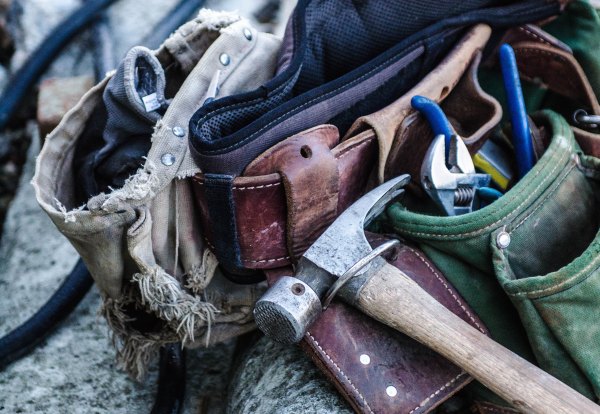
For me, DIY is my creative outlet. Over the years, I’ve enjoyed building my woodshop, adding to my collection of tools and slowly but surely taking over the garage. (I can proudly say it’s the one place in the household that’s “all mine.”)

If DIY is something you’d like to try your hand at (or improve your skills with), here are some good websites that can provide encouragement and how-tos: *

1. April Wilkerson

This is my personal favorite–April is an engaging, creative individual who makes tackling any DIY or home construction project with a can-do attitude and a sense of fun. Check out her YouTube channel for inspiration and how-tos.

2. Instructables

Like many of the resources on this lister, Instructables is made by DIYers, for DIYers. That means nearly all the project plans and instructions are contributed by members of the community. Most Instructables feature clear instructions with plenty of pictures, along with detailed parts and materials lists. The active community offers suggestions and variations via lively comments beneath each project. If you can follow a recipe, you can follow an Instructable.

3. Make:

Make: is a quarterly print journal and a webzine. Each themed journal is stuffed with clever DIY projects for tinkerers of various skill levels. The website also includes a store, “The Maker Shed,” with books, journals and plenty of starter kits, perfect for beginning gizmo DIYers.

4. Apartment Therapy

“Saving the world, one room at a time” is Apartment Therapy’s official slogan, but it could also be “high design for small budgets.” The website features tips and advice for every room of an apartment or house, and lots of DIY projects for clever storage and sharp décor. The how-tos aren’t quite as thorough as those found on Instructables, but the projects are a little more polished.

5. Ana White

Ana White features a giant collection of furniture project plans from DIY doyenne Ana White and members of the community. Projects are sorted by type, skill level, style and room. Ana’s plans are typically detailed and well-illustrated. Contributor plans can be less refined in presentation, but still easy to follow. DIYers who make something following plans from the site are encouraged to share their results, too. They are often even more impressive than the originals.

6. The Family Handyman

The Family Handyman features simple projects and DIY home maintenance tips and advice. While the website offers plenty of how-tos and information, you’ll need a subscription (digital or print) to unlock all of the magazine’s instructions and resources.

7. Mother Earth News

From baking bread to solar rooftops, Mother Earth News has been covering the DIY scene in print and online for decades. The site and magazine feature lots of tips and advice about sustainable living, from growing and preserving food, to living off the grid. DIY projects range from sundials to solar food dehydrators.

What are some DIY projects you’ve tackled?  I’d love to hear! And if you feel inspired by any of these sites to tackle a project in your own home, please share. Good luck!

Doug Lawrence is a licensed real estate broker and avid DIYer. He’s proud to have inherited his love of tools and woodworking from his dad, Ken, along with a great collection Ken’s tools to add to his own woodshed. Current projects include a farmhouse table for the kitchen and a corn-hole game for family fun next summer! You can find Doug at www.douglawrencerealestate.com where he’d be happy to answer your questions about buying, selling, and investing in real estate in the Great Pacific Northwest … or about DIY!

* List of websites adapted from article by Lars Peterson, US News and World Report, April 2015

(c) 2018 Doug Lawrence. All Rights Reserved.